Kenya’s Proposed Mitumba Tax: What It Reveals About the Future of Fashion Law in East Africa

Research and Analysis
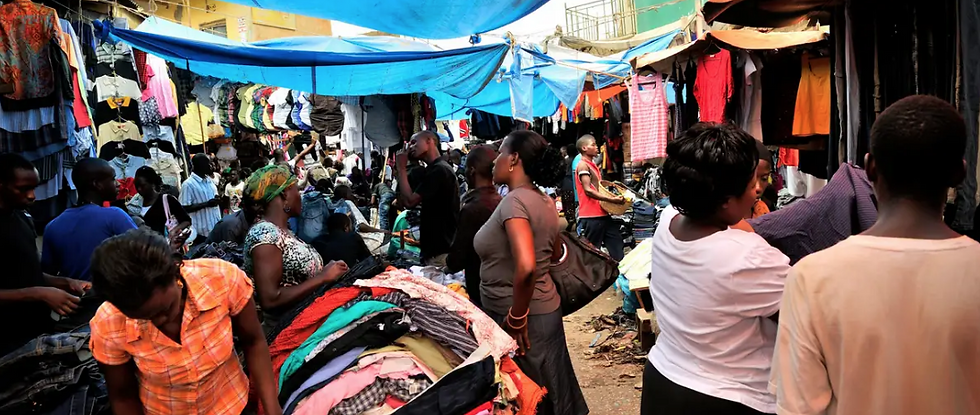
Kenya’s recent proposal to impose a 5% deemed profit tax on imported second hand clothing, commonly known as mitumba, sparked one of the most important fashion policy debates East Africa has seen in years. Although the proposal was eventually withdrawn after public backlash, the conversation it triggered continues to expose deeper tensions surrounding trade, local manufacturing, sustainability, consumer access, and the future of African fashion economies.
At first glance, the issue appeared to be about taxation. In reality, it highlighted how fashion law is becoming increasingly tied to economic sovereignty, industrial development, and regional policy across Africa.
Understanding the Proposed Mitumba Tax
Under Kenya’s draft Finance Bill, importers of second hand clothing would have been required to pay a 5% deemed profit tax upfront before goods could enter the market. The proposal targeted one of the largest sectors within East Africa’s informal retail economy.
Mitumba markets are deeply embedded in everyday life across Kenya, Uganda, Tanzania, Rwanda, and other neighboring countries. Millions of consumers rely on second hand clothing because it is significantly more affordable than newly manufactured garments. At the same time, thousands of traders, stylists, tailors, resellers, and creatives depend on the mitumba economy for income and business opportunities.
The proposal immediately raised concerns that increased taxation would raise prices for consumers, reduce profits for small traders, and disrupt informal fashion ecosystems that support large portions of the population.
Yet supporters of the proposal argued that stronger regulation of second hand imports could help revive local textile industries that have struggled for decades against the dominance of imported clothing.
Why Fashion Law Is Central to This Debate
The mitumba tax debate demonstrates that fashion law in Africa extends far beyond intellectual property or luxury branding. It intersects directly with trade regulation, taxation, labor markets, manufacturing policy, and regional economic development.
Several legal and policy questions emerged from the proposal:
• Should governments protect local industries through import restrictions or taxation?
• How can policymakers regulate informal economies without harming vulnerable communities?
• What balance should exist between affordable consumer access and industrial growth?
• Can African countries strengthen domestic manufacturing while remaining compliant with international trade agreements?
• How should sustainability conversations address the realities of second hand clothing markets in developing economies?
These questions place fashion law at the center of broader economic policy discussions.
The Historical Context Behind Mitumba in East Africa
To fully understand the debate, it is important to recognize the historical role second hand clothing has played in East Africa.
During the 1980s and 1990s, structural adjustment programs and trade liberalization policies opened many African markets to imported goods. At the same time, local textile industries weakened due to reduced state support, rising production costs, and increased foreign competition.
Second hand clothing imports rapidly expanded because they offered consumers affordable alternatives to locally manufactured garments. Over time, mitumba evolved into a massive informal economy supporting millions of livelihoods across the region.
Today, mitumba is not simply a retail sector. It is part of East Africa’s social and economic infrastructure.
For many consumers, second hand clothing provides access to quality garments at prices local manufacturers often cannot match. For entrepreneurs, mitumba markets create low-barrier entry points into fashion retail and creative business.
This explains why attempts to regulate or restrict second hand imports often generate strong public reactions.
The Impact on Emerging Designers and Creative Industries
One of the most complex aspects of the debate involves its impact on local designers and creative professionals.
Supporters of stricter import regulation argue that reducing dependence on second hand clothing could create more demand for locally produced fashion. In theory, this could:
• Strengthen domestic textile manufacturing
• Increase investment in garment production
• Create jobs within local supply chains
• Encourage industrial growth
• Expand opportunities for emerging designers
Countries such as Rwanda have previously supported restrictions on second hand imports as part of broader industrialization strategies aimed at rebuilding domestic manufacturing capacity.
However, the reality for many African designers is more nuanced.
Mitumba markets are often used as sourcing spaces for upcycling, styling, costume design, and creative experimentation. Many independent designers incorporate second hand garments into sustainable fashion practices or transform imported pieces into entirely new products.
In this sense, mitumba also contributes to innovation within Africa’s creative economy.
The challenge for policymakers is determining how to support local manufacturing without dismantling existing ecosystems that already sustain thousands of creatives and entrepreneurs.
Trade Politics and Regional Tensions
The debate also carries significant regional and international trade implications.
East African countries have periodically explored restrictions on second hand clothing imports through the East African Community (EAC). However, previous attempts generated tensions with major trading partners, particularly the United States.
In 2018, the United States threatened to suspend trade benefits under the African Growth and Opportunity Act (AGOA) after some East African countries proposed restrictions on used clothing imports. The dispute highlighted how fashion policy can quickly become entangled with global trade negotiations.
As African governments pursue industrialization strategies, they must navigate complex relationships involving:
• International trade agreements
• Regional economic integration
• Foreign investment
• Manufacturing competitiveness
• Consumer protection
Fashion law is therefore increasingly connected to geopolitical and economic strategy.
The Sustainability Debate
The mitumba conversation also intersects with global sustainability discussions.
Many advocates argue that second hand clothing promotes circular fashion by extending garment lifecycles and reducing textile waste. In a world increasingly concerned about overproduction and environmental harm, resale markets are often viewed as environmentally beneficial.
However, critics point out that large volumes of low-quality discarded clothing from wealthier countries effectively turn African markets into dumping grounds for global fashion waste.
This creates another difficult policy question:
How can African countries participate in sustainable fashion systems without becoming dependent on imported textile surplus from foreign markets?
The answer may require stronger regulation around quality standards, waste management, and investment in local circular fashion industries rather than blanket restrictions alone.
What This Means for the Future of Fashion Law in Africa
The proposed mitumba tax ultimately revealed something much larger than a debate about second hand clothing.
It demonstrated that Africa’s fashion industry is entering a new legal and policy era where governments, lawyers, economists, and creatives will increasingly shape the future of the sector together.
The future of African fashion will depend not only on designers and brands, but also on:
• Tax systems
• Trade policy
• Intellectual property protection
• Manufacturing regulation
• Regional economic agreements
• Labor standards
• Sustainability frameworks
As African fashion industries continue to grow globally, legal infrastructure will become essential in determining who benefits economically from creativity across the continent.
The mitumba debate may have started with a proposed tax, but it ultimately exposed a much broader transformation taking place within African fashion economies.
Fashion law in Africa is no longer a niche field. It is becoming a central force in shaping industrial growth, cultural ownership, and economic power across the continent.


Comments